logo
Achievers Automation Limited

達成者は,すべてのあなたの必要を達成可能にする!

ホーム ニュース

Industrial Automation: Core Technologies, Implementation Strategies, and Future Trends in Smart Manufacturing

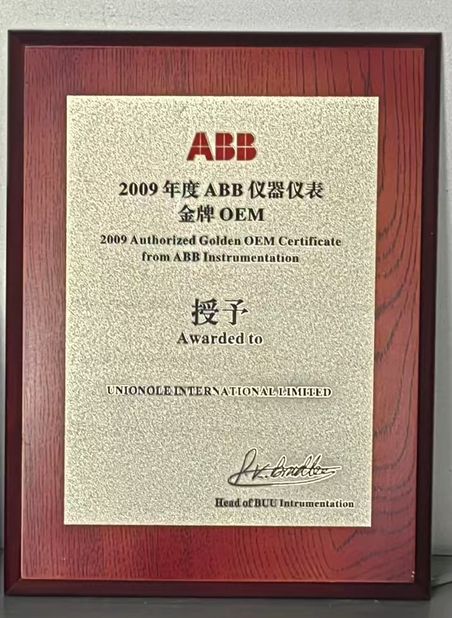
認証
中国 Achievers Automation Limited 認証
顧客の検討
調達マネージャーとして、私は価格に非常に敏感です。貴社製品は、卓越した品質を驚くほど競争力のある価格で提供しており、市場での大きな優位性をもたらしています。特に、複雑な物流要件への対応において、優れたプロフェッショナリズムと忍耐力で対応し、商品の確実な到着を保証してくれた貴社のサービスチームに感謝申し上げます。

—— アリ・ウィボウォ氏 - 調達担当

お客様の製品品質の安定性と耐久性は、私どもの最優先事項であり、貴社製品は期待をはるかに上回る性能を示しています。ラホールの高温多湿な気候下でも優れた性能を発揮しています。当初は価格に惹かれましたが、長期的なパートナーシップを確実なものにしたのは、貴社の申し分のないアフターサービスです。技術的な問題はすべて解決されています。

—— アハメド・ラザ氏 - 業務担当役員

御社が示したプロフェッショナルなサービスレベルは、最初の連絡から最終的な納品まで、本当に印象的でした。リヤドにおける当社のプロジェクトの緊急性を深く理解されていました。当然のことながら、一流のサービスは一流の製品によって支えられなければなりませんが、御社の製品品質は当社の高い基準を満たし、それを上回っています。考慮すると

—— Mr. Khalid - プロジェクトディレクター

オンラインです
会社 ニュース
Industrial Automation: Core Technologies, Implementation Strategies, and Future Trends in Smart Manufacturing
最新の会社ニュース Industrial Automation: Core Technologies, Implementation Strategies, and Future Trends in Smart Manufacturing


Introduction to Industrial Automation

Industrial automation refers to the integration of advanced technologies—including robotics, control systems, and artificial intelligence—to operate industrial processes with minimal human intervention. This paradigm shift from manual labor to automated systems has revolutionized manufacturing, energy, pharmaceuticals, and logistics by enhancing efficiency, precision, and scalability. Initially focused on mechanizing repetitive tasks, industrial automation now encompasses smart factories where interconnected devices communicate in real time, enabling adaptive production, predictive maintenance, and data-driven decision-making. The evolution from basic programmable logic controllers (PLCs) to AI-enabled cyber-physical systems has positioned automation as a cornerstone of Industry 4.0, driving sustainability, safety, and competitiveness in global markets. As industries face demands for higher customization, reduced costs, and resilient supply chains, automation provides the foundational infrastructure to meet these challenges while supporting human labor through collaborative robotics and intuitive interfaces .

Core Technologies and System Architectures

Industrial automation relies on a layered architecture of hardware and software components that work in unison to monitor, control, and optimize processes. Sensors and actuators​ serve as the "senses and hands" of the system, collecting real-time data on parameters like temperature, pressure, and flow, while executing physical actions based on controller commands . Programmable Logic Controllers (PLCs)​ act as the central nervous system, processing input signals from sensors and executing pre-programmed logic to manage machinery operations with high reliability and speed . Supervisory Control and Data Acquisition (SCADA)​ systems provide a bird’s-eye view of operations, enabling remote monitoring and control of geographically dispersed assets, such as pipelines or power grids . Human-Machine Interfaces (HMIs)​ translate complex data into visual dashboards, allowing operators to interact with systems intuitively . Meanwhile, robotics​ handles tasks ranging from precision assembly to hazardous material handling, with collaborative robots (cobots) designed to work safely alongside humans . These technologies are increasingly unified through the Industrial Internet of Things (IIoT), which enables data exchange between devices, and artificial intelligence (AI), which leverages machine learning for predictive analytics and autonomous decision-making .


Key Application Scenarios

Industrial automation delivers significant value across diverse sectors by addressing unique operational challenges. In automotive manufacturing, robotic arms perform welding and painting with millimeter precision, while AI-powered vision systems inspect components for defects, reducing errors by 25% and accelerating production cycles by 30% . The energy sector​ employs SCADA systems to monitor oil pipelines and power grids, using predictive analytics to detect leaks or failures before they cause downtime or environmental damage . Pharmaceutical companies​ leverage automation for sterile packaging and drug formulation, where PLC-controlled environments ensure compliance with stringent regulatory standards and minimize human-induced contamination . In food processing, automated sorting and packaging lines integrate IoT sensors to track inventory and optimize supply chains, while smart warehouses use autonomous guided vehicles (AGVs) to manage logistics with 50% faster order fulfillment . Even traditionally labor-intensive sectors like agriculture​ benefit through automated irrigation systems and drones that monitor crop health, boosting yield while conserving resources . These applications highlight automation’s role in enhancing productivity, quality, and safety while enabling scalability and customization.

Implementation Strategies and Best Practices

Successful automation implementation requires a phased approach that aligns technology with operational goals. Begin by conducting a feasibility analysis​ to identify high-impact areas, such as repetitive tasks prone to human error or processes requiring precise calibration . Select technologies based on specific needs: for example, PLCs and HMIs for assembly line control, or IIoT platforms for real-time asset monitoring . Integration​ should prioritize interoperability between new and legacy systems, using standardized protocols like OPC UA to ensure seamless data flow . Employee training​ is critical to mitigate resistance and build proficiency; workshops on operating cobots or interpreting AI analytics empower workers to collaborate effectively with automated systems . Cybersecurity measures—such as network segmentation and regular vulnerability assessments—protect connected infrastructure from threats, while predictive maintenance​ schedules minimize downtime by addressing issues before they escalate . Finally, adopt a continuous improvement framework​ that leverages data analytics to refine processes, ensuring automation delivers sustained returns on investment .

Future Trends and Developments

Industrial automation continues to evolve through several key trends that expand its capabilities and applications. The integration of artificial intelligence and machine learning​ enables systems to move beyond predetermined responses to adaptive decision-making based on pattern recognition and predictive analytics . Collaborative robotics (cobots)​ represent another significant trend, with machines designed to work safely alongside human operators by incorporating advanced sensors and force-limiting technology . Digital twin technology​ creates virtual replicas of physical systems, enabling simulation, monitoring, and optimization without disrupting actual operations . Industrial Internet of Things (IIoT)​ connectivity allows automated systems to communicate and coordinate across entire production ecosystems, facilitating real-time data exchange and centralized management . The convergence of operational technology (OT) and information technology (IT)​ creates unified platforms that bridge the gap between factory floor operations and enterprise management systems . Advances in human-machine interfaces (HMIs)​ make automated systems more intuitive to operate through natural language processing, augmented reality, and gesture control . As these technologies mature, they enable increasingly autonomous systems capable of self-diagnosis, self-optimization, and even self-repair in limited applications .

Conclusion: The Expanding Role of Automation

Industrial automation has evolved from simple mechanization to sophisticated cyber-physical systems that transform how work is performed across industries. The technology continues to advance through innovations in AI, robotics, and connectivity, enabling increasingly capable systems that enhance productivity, quality, and safety while creating new opportunities for human-machine collaboration. As organizations navigate the complexities of implementation, they must balance technological capabilities with human factors, ensuring that automation serves to augment rather than simply replace human workers. The future of automation points toward more adaptive, intuitive, and collaborative systems that seamlessly integrate with human operators to achieve unprecedented levels of efficiency and innovation .


-Endress+Hauser

-ALLEN BRADLEY 

-YOKOGAWA 

-MTL

-P+F

-More products  


最新の会社ニュース Industrial Automation: Core Technologies, Implementation Strategies, and Future Trends in Smart Manufacturing  0

Achievers Automation Limited has more than 10 years experience in the market of Industrial Automation, specialized in reselling factory sealed Probe, Sensor, DCS,isolator barrier, HMI, PLC,Adapter,Profibus connector and cable from Brands as BENTLY NEVADA, Endress+Hauser, YOKOGAWA,MTL,Allen-Bradley, Pepperl+Fuchs,Rosemount, ASCO, Schneider, Lenze, Pro-face, Mitsubishi, Omron, Lenze, Delta, Honeywell, Siemens and etc. If you have any request, please do not hesitate to contact us.


パブの時間 : 2025-11-28 08:30:07 >> ニュースのリスト
連絡先の詳細
Achievers Automation Limited

コンタクトパーソン: Ms. Caroline Chan

電話番号: 13271919169

私達に直接お問い合わせを送信 (0 / 3000)