logo
Achievers Automation Limited

達成者は,すべてのあなたの必要を達成可能にする!

ホーム ニュース

Level Measurement in Instrumentation: Technologies, Applications, and Implementation Guidelines for Industrial Processes

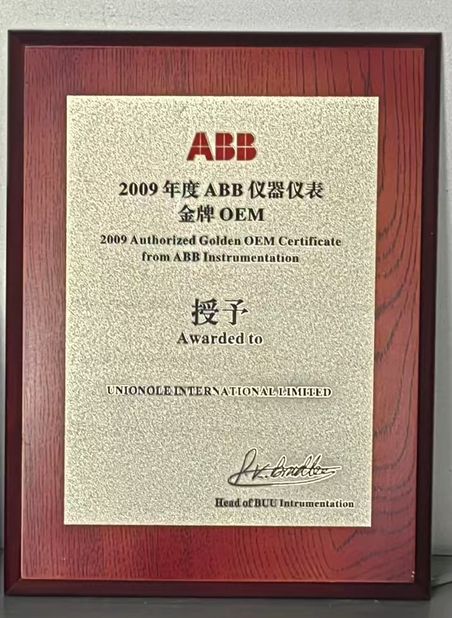
認証
中国 Achievers Automation Limited 認証
顧客の検討
調達マネージャーとして、私は価格に非常に敏感です。貴社製品は、卓越した品質を驚くほど競争力のある価格で提供しており、市場での大きな優位性をもたらしています。特に、複雑な物流要件への対応において、優れたプロフェッショナリズムと忍耐力で対応し、商品の確実な到着を保証してくれた貴社のサービスチームに感謝申し上げます。

—— アリ・ウィボウォ氏 - 調達担当

お客様の製品品質の安定性と耐久性は、私どもの最優先事項であり、貴社製品は期待をはるかに上回る性能を示しています。ラホールの高温多湿な気候下でも優れた性能を発揮しています。当初は価格に惹かれましたが、長期的なパートナーシップを確実なものにしたのは、貴社の申し分のないアフターサービスです。技術的な問題はすべて解決されています。

—— アハメド・ラザ氏 - 業務担当役員

御社が示したプロフェッショナルなサービスレベルは、最初の連絡から最終的な納品まで、本当に印象的でした。リヤドにおける当社のプロジェクトの緊急性を深く理解されていました。当然のことながら、一流のサービスは一流の製品によって支えられなければなりませんが、御社の製品品質は当社の高い基準を満たし、それを上回っています。考慮すると

—— Mr. Khalid - プロジェクトディレクター

オンラインです
会社 ニュース
Level Measurement in Instrumentation: Technologies, Applications, and Implementation Guidelines for Industrial Processes
最新の会社ニュース Level Measurement in Instrumentation: Technologies, Applications, and Implementation Guidelines for Industrial Processes


Introduction to Level Measurement in Industrial Instrumentation

Level measurement is a fundamental parameter in industrial instrumentation, referring to the determination of the height or volume of substances (liquids, solids, or slurries) in tanks, vessels, or silos. This process is critical for inventory management, process control, safety assurance, and operational efficiency across industries such as oil and gas, water treatment, chemical processing, and pharmaceuticals. Level measurement systems can be broadly categorized into two types: continuous measurement, which provides real-time level data over a range, and point-level detection, which activates alarms or controls when levels reach specific thresholds. Modern level instrumentation integrates sensors, transmitters, and communication protocols (e.g., 4–20 mA, HART, PROFIBUS) to enable seamless data transmission to control systems, supporting automation and predictive maintenance strategies. The selection of an appropriate level measurement technology depends on factors like substance properties, environmental conditions, accuracy requirements, and cost constraints .

Operating Principles and Key Technologies

Level measurement technologies leverage diverse physical principles to address varying application needs. Hydrostatic pressuretransmitters calculate level by measuring the pressure exerted by a liquid column, suitable for corrosive or viscous fluids but requiring density compensation . Ultrasonicand radarsensors use time-of-flight principles, with ultrasonic devices emitting sound waves and radar employing electromagnetic waves for non-contact measurement; radar excels in dusty or vaporous environments, while ultrasonic systems are cost-effective for clean liquids . Capacitivesensors detect level changes by measuring capacitance variations between a probe and vessel wall, ideal for liquids, solids, and slurries but vulnerable to material coating on probes . Float-basedand magnetostrictivetechnologies provide reliable point-level detection or continuous tracking via mechanical linkage or magnetic field interactions, respectively . Advanced methods like guided wave radar(GWR) combine radar with probe guidance for challenging media, and laser level sensorsoffer high precision for transparent liquids . Each technology has distinct advantages: non-contact methods avoid contamination, while contact designs like displacers handle high-pressure/temperature environments .


Key Application Scenarios

Level measurement instrumentation addresses unique challenges in different sectors. In the oil and gas industry, radar and hydrostatic transmitters monitor crude oil in storage tanks, with GWR used for interface detection between oil and water, ensuring safety and compliance . Water and wastewater treatmentfacilities rely on ultrasonic sensors for open-channel flow measurement and chemical dosing, while capacitive switches prevent pump dry-running in sumps . The chemical processingsector uses corrosion-resistant radar transmitters for reactor level control and capacitive sensors for abrasive slurries, prioritizing accuracy in aggressive media . Food and beverageapplications employ sanitary radar or ultrasonic sensors for ingredient mixing and packaging, with hygienic designs allowing clean-in-place (CIP) sterilization . In mining and solids handling, vibrating fork switches and laser sensors manage granular materials in silos, avoiding buildup issues . Additionally, pharmaceuticalapplications use non-invasive optical sensors for precise batch processing in sterile tanks .

Selection Criteria and Implementation Best Practices

Selecting the right level measurement technology requires evaluating multiple parameters. Substance properties like conductivity, viscosity, and dielectric constant determine suitability—for example, radar works well for low-dielectric materials, while magnetic level gauges suit conductive liquids . Environmental conditions such as temperature extremes (e.g., -40°C to 400°C), pressure ratings (up to 400 bar for radar), and presence of foam/dust influence technology choice; radar outperforms ultrasonic in vaporous settings . Accuracy needs range from ±0.1% for custody transfer (e.g., magnetostrictive transmitters) to ±1% for basic process control . Installation constraints like vessel geometry and mounting options dictate sensor placement, with stilling wells mitigating turbulence in agitated tanks . Implementation best practices include calibrating for zero and span, using shielding for electronic sensors in noisy environments, and integrating diagnostics via IO-Link for predictive maintenance . For hazardous areas, certifications like ATEX/IECEx ensure safety .


Advantages, Limitations, and Emerging Trends

Each level measurement technology offers distinct benefits and constraints. Radar provides high accuracy (±0.5%) and reliability in extreme conditions but at a higher cost, while ultrasonic sensors are affordable but susceptible to environmental interference . Hydrostatic transmitters are cost-effective for liquids but require density compensation, and capacitive devices handle diverse media but need regular cleaning . Emerging trends include IIoT integration, where smart sensors with wireless protocols (e.g., WirelessHART) enable real-time data analytics and remote monitoring . Advanced diagnosticsin modern transmitters detect coating or probe faults, reducing downtime. Laser-basedand 3D imagingtechnologies enhance precision for solids and opaque fluids, and miniaturizationexpands applications in compact equipment . The shift toward digital twinsallows simulation-based optimization, improving lifecycle efficiency .

Conclusion: Enhancing Industrial Efficiency with Precision Level Measurement

Level measurement instrumentation is pivotal for modern industrial automation, combining precision, reliability, and adaptability to diverse applications. By selecting technologies aligned with specific needs—such as radar for harsh conditions or ultrasonic for cost-sensitive projects—industries can achieve optimal process control, safety, and sustainability. Future advancements in smart sensors and IIoT will further solidify the role of level measurement in data-driven industrial ecosystems .


-Endress+Hauser

-ALLEN BRADLEY 

-YOKOGAWA 

-MTL

-P+F

-More products  


最新の会社ニュース Level Measurement in Instrumentation: Technologies, Applications, and Implementation Guidelines for Industrial Processes  0

Achievers Automation Limited has more than 10 years experience in the market of Industrial Automation, specialized in reselling factory sealed Probe, Sensor, DCS,isolator barrier, HMI, PLC,Adapter,Profibus connector and cable from Brands as BENTLY NEVADA, Endress+Hauser, YOKOGAWA,MTL,Allen-Bradley, Pepperl+Fuchs,Rosemount, ASCO, Schneider, Lenze, Pro-face, Mitsubishi, Omron, Lenze, Delta, Honeywell, Siemens and etc. If you have any request, please do not hesitate to contact us.


パブの時間 : 2025-11-27 09:19:58 >> ニュースのリスト
連絡先の詳細
Achievers Automation Limited

コンタクトパーソン: Ms. Caroline Chan

電話番号: 13271919169

私達に直接お問い合わせを送信 (0 / 3000)